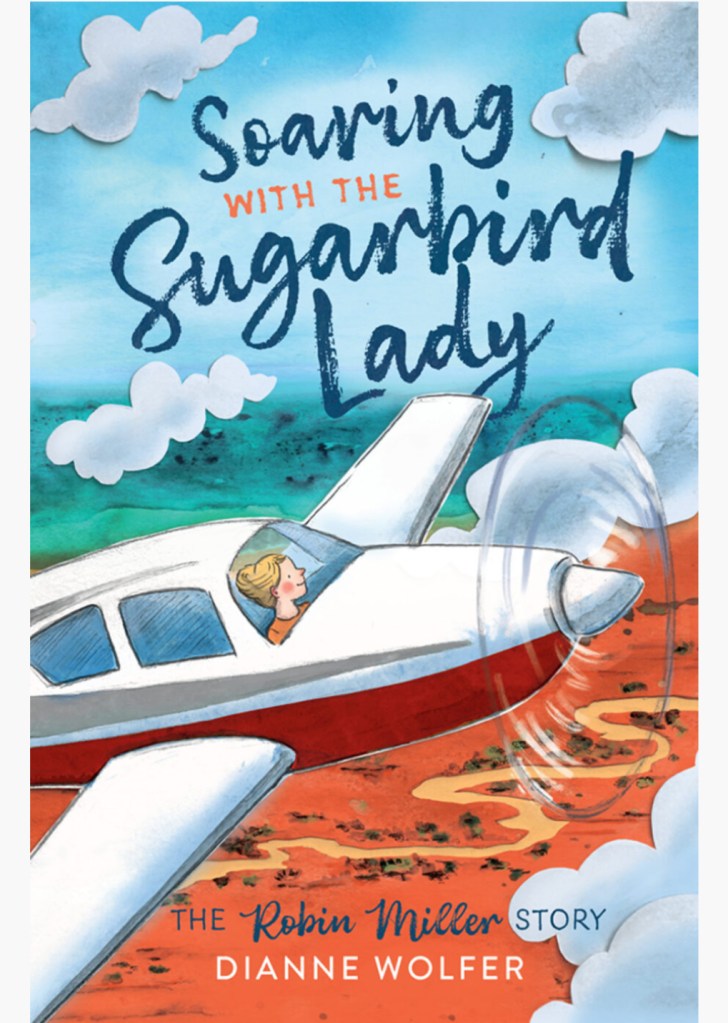
Robin Miller, fondly known as ‘The Sugarbird Lady’ was a pioneering aviator, humanitarian, and trailblazer for women. Had she not died so young, this week would mark her eighty-fourth birthday. Researching and writing a book based on Robin’s life has been an honour. Soaring with the Sugarbird Lady, published by Fremantle Press, comes out in March 2025
Robin packed so much living into thirty-five years. The daughter of author Mary Durack and aviator Horrie Miller, Robin grew up around aircraft. She overcame discrimination to become a pilot in the 1960s and saved hundreds of lives by flying to remote communities, where she administered 37,000 doses of the Sabin polio vaccine. Robin seemed to drop out of the vast blue sky in her Mooney aircraft, and as the vaccine was delivered via a sugar cube, she soon became known as ‘The Sugarbird Lady’.
After winging through aviation ‘glass ceilings’ in a miniskirt and bouffant hairdo, Robin became a pilot with the Royal Flying Doctor Service. She flew at all hours to help sick and injured patients. When a pregnant woman went into labour mid-flight, Robin put the plane onto autopilot, delivered the baby, and landed safely with one extra passenger.
Robin also ferried RFDS aircraft from Europe and America to Western Australia. You can see one of these, a single-engine FOCLI aircraft, and her dad’s Wackett at the Bull Creek Aviation Heritage Museum, where Soaring with the Sugarbird Lady will be launched by Professor Fiona Stanley, AC.
Fifty years after Robin’s death, this brave aviator remains a role model for all those with an adventurous spirit. I hope you will join me at the launch on March 5th 2025. Details here.
It’s been a very long while between blog posts, apologies!
The good news is that I’ve been busy writing and have some exciting projects in the pipeline. More about those soon.
In the meantime, I’m thrilled to share that Scout and the Rescue Dogs has been honoured with a Children’s Book Council of Australia shortlisting. For those not working in KidLit, it’s a huge and wonderful thing.
In the buildup to Children’s Book Week, schools across Australia make amazing library displays that will include Scout. Young ‘shadow judges‘ will discuss the stories, choose their own winners, and do fun activities based on each book.
Fremantle Press has brightened the cover and published this story about surfing grannies in a smaller format that’s perfect for small hands. Since it was last in print, there are dozens more Granny Grommets braving the surf in Kinjarling Albany, and dozens more young grommets as well. Check out some of the clips and photos of the real GGs on this page.
Between all this excitement, I’ve been writing and editing, and early next year, I’ll have three new titles coming out. Two picture books, each with an amazing illustrator, and a biography/novel about an inspirational Australian. I’ll be posting about them soon.
In other news, I’ve jumped on board Shepherd, a great site where authors recommend five books linked to a topic. My first list is called The Best Books with an Important Octopus Character. It’s inspired, of course, by the octopus characters in my novel The Shark Caller. One is a giant gatekeeper, and the other is Izzy’s frightening adversary. Browsing Shepherd is addictive, in that one link leads to another and another and another … I’ve added so many titles to my reading stack!
Well, back to the editing for me. My next post will focus on Anzac books and activities. All the best for now.
Skye always wanted to be an entomologist. Her unusual childhood pets included ‘Fluffy’ the tarantula and ‘Woodstock’ a giant burrowing roach that blows kisses and has starred in video clips.
She followed her dream and studied bug science as well as food science. Now, as Australia’s first farmer of edible insects, and a future foods pioneer, Skye and her trailblazing team, teach people that insects are an eco-friendly, and delicious, food alternative.
Most of all, Skye loves inspiring the next generation to follow their passion to achieve their career dreams.
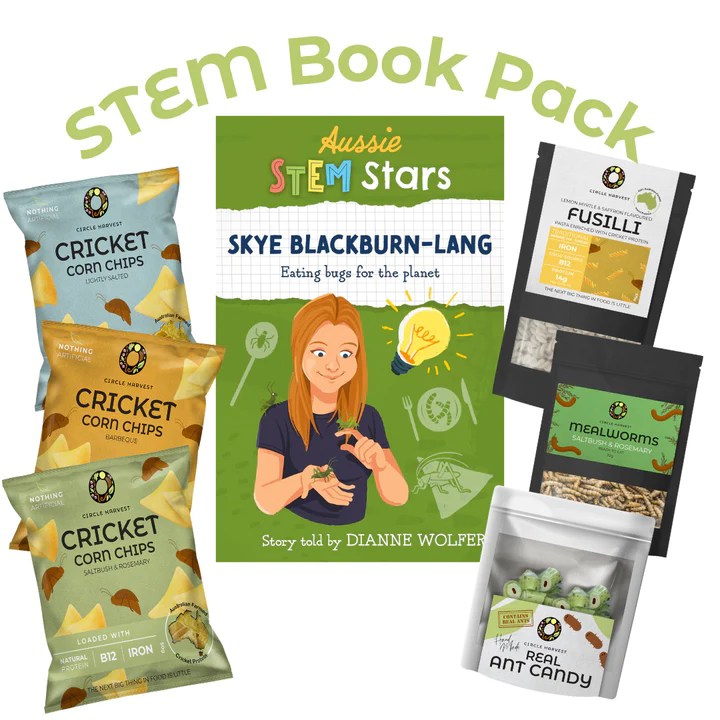
The Aussie STEM Stars series celebrates Australia’s leaders in Science, Technology, Engineering and Mathematics. To celebrate the new release, Skye’s online shop, Circle Harvest, is offering a book and edible bugs bundle. I’ve tried all the delicious products in the pack except one …
Dianne Wolfer’s Light series is a standout historical book series for kids … The Last Light Horse is a fantastic conclusion to the series and a heartfelt look at an unsung hero … With an educational focus and breathtaking illustrations, this is one inspiring story of courage and sacrifice, perfect for fans of Stephen Spielberg’s War Horse.
Thank you Better Readings. Here is a link to the full review plus a pre-ordering link. The Last Light Horse will be released April 1st 2022. In the meantime, you can find out more about this special horse on my website, under The Real Sandy tab.
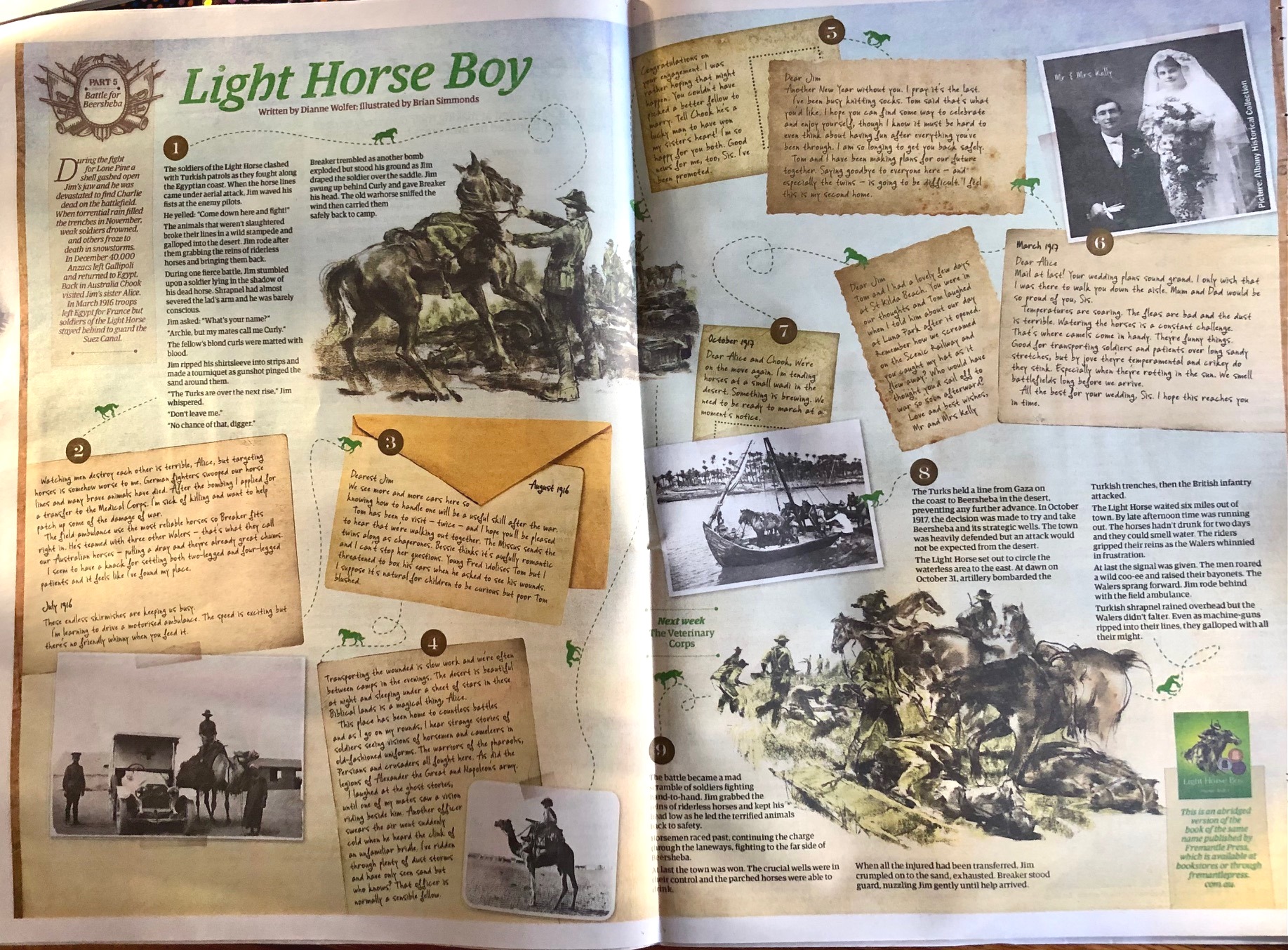
How lovely to see Light Horse Boy back in The West Australian newspaper’s ED! lift out.
For those who’ve been following the WWI story, it’s now Week Seven and Jim has been evacuated from battle with terrible wounds. Back in Melbourne, his sister, Alice, and Jim’s mate, Chook are desperate to hear news of him. Meanwhile, Jim’s unable to write and is haunted by scenes of battle, and the last glimpse of his beloved horse, Break
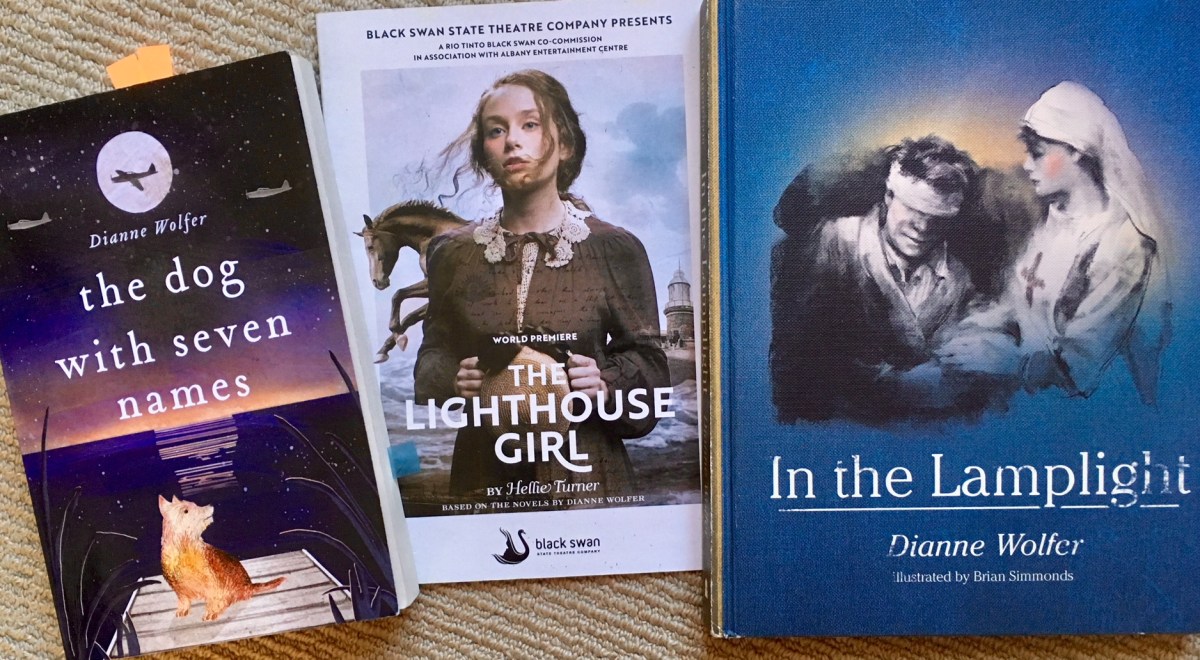
Light Horse Boy was published in 2013 by Fremantle Press. It won the 2014 WA Premier’s Award was a CBCA Honour Book. It’s the second title in my ‘Light series’. I didn’t know then that it was going to be a part of a series. In the Lamplight followed in 2018, exploring the story from nurse Rose’s perspective, linking to the Suffragette Movement and life in Harefield, UK during WWI. And in a fortnight The Last Light Horse will be published sharing the story of Sandy, the only horse of 136,000 Australian Walers to return. More about that title soon. In the meantime, I’ve loved reading Letters to the Editor and hearing from young readers and their teachers who are enjoying the serialisation.
I am so pleased that this translation was able to go ahead during this challenging time, and hope that many new readers will enjoy the story of a small dog in north-western Australia during WWII.
Thank you, Min Zha for your translation. I wish I could speak/read Chinese so that I could enjoy your words! Thank you also Zhuang Yuan for editing and steering little dog on her exciting new adventure. I love the cute cover image (full jacket below) and feel sure that Princess, Elsie, and all the other characters would too.
When I was little I loved jigsaws. I was good at Maths until Year 5. Then we moved overseas and I missed a few important things, like short division. When we returned I was in high school. My new teacher was a brilliant mathematician but couldn’t fathom my inability to get things the first time (I’d been put in the top maths class). It wasn’t until long after leaving school that I learned there was an actual purpose to memorising algebraic formula, things like sine and cosine were used in the real world!
Biology was way more interesting to me. Who remembers The Web of Life textbook? I loved that book. It was a brick and I carried it one and a half kilometres to and from school for years. The Web of Life was full of interesting charts and images that related to the world around me. I loved the title too.
Munjed’s story is part of the Aussie STEM Stars series, celebrating Australian experts in Science, Technology, Engineering and Mathematics. His work has made Australia a world-leader in osseointegration. Unlike me, Munjed excels in both biology and algebra! Being part of the Aussie STEM Stars series has helped me reassess the importance of STEM subjects (even maths). I’ve loved reading about Georgia Fear Ware‘s fascinating work with reptiles and cane toads as well as learning more about amazing Fiona Wood. I hope readers of all ages will enjoy this terrific new series.
Refugees bring wisdom, skills and fresh perspectives to our ‘Lucky Country’.
Saturday June 20th is World Refugee Day. For the past eight months I’ve been researching the life of Dr Munjed Al Muderis, the world-renowned surgeon whose fascination for robotics, his dedication and glass-half-full attitude has led Australia to become the world leader for pioneering osseointegration surgery. Munjed Al Muderis – From refugee to surgical inventor will be published by Wild Dingo Press on September 1st 2020. A sneak cover peek is below.
According to the United Nations 1951 Refugee Convention, a refugee is someone who fled his or her home and country owing to “a well-founded fear of persecution because of his/her race, religion, nationality, membership in a particular social group, or political opinion”.
After refusing to mutilate the ears of army deserters in Iraq, Munjed fled for his life with one possession, the medical book Last’s Anatomy. He survived an horrendous voyage in a rickety, overcrowded boat, arrived at Christmas Island and was taken to Curtin Detention Centre in north-western Australia. There he suffered ten months of bullying, false accusations and indignities. But Munjed never gave up. He always wanted to make a difference, to help those less fortunate.
Osseintegration is a revolutionary surgical procedure whereby a metal stem is implanted into the bone of a patient’s remaining limb. The stem then connects to a robotic prosthesis, allowing improved sensory experience, greater movement and less pain. The surgery is life-changing for patients. Munjed’s interest in robotics was sparked long ago when he was a child watching Arnie Schwarzenegger as “The terminator“.
Munjed Al Muderis – From refugee to surgical inventor explores Munjed’s journey to Australia and other life-shaping moments from his early years. This book is the third title in the Aussie STEM Stars series. The first three books will be released together. In Book 1 Cristy Burne explores the life of Fiona Wood AM. In Book 2 Claire Saxby explores the life of Dr Georgia Ward-Fear.
Munjed’s skill and compassion has changed the lives of thousands of people across the world. He’s a powerful advocate for Amnesty International, the Red Cross and asylum seekers. Munjed is the current NSW Australian of the Year and has received many other accolades. This inspirational surgeon and humanitarian is one of many refugees who have enriched Australia. On this World Refugee Day let’s all take a moment to acknowledge these contributions and to remember the importance of kindness.
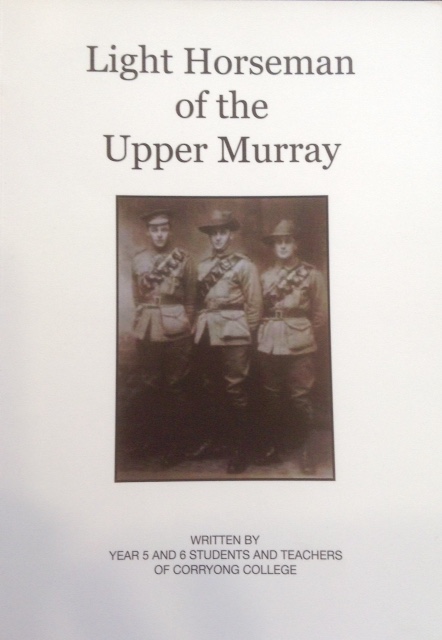
Last year the Year 5 and 6 students and teachers at Corryong College spent months researching and gathering information about 57 Light Horse men from their town and the surrounding district. The result is a professionally bound and just released book, Light Horseman of the Upper Murray.
The book is a valuable reference and I was honoured to learn that this project was inspired by a class reading of Light Horse Boy.
Researching family histories and community members who served in wartime is a great way to foster students’ interest in history. Teachers Stephen Learmonth and Georgia Dally invited their local RSL and historical society to be involved and also enlisted the support of Dr Honor Auchinleck (granddaughter of General Sir Harry) Chauvel). During a visit to Corryong I was impressed by the knowledge and research skills of these young students and you can read more about this visit here.
I wonder whether any other schools have created similar collections? If anyone knows of one I’d love to hear about it …
Other 2018 highlights include ASA mentoring the super talented Amelia Mellor, speaking at the National ALEA/AATE Conference, Write Around the Murray and the CBCA NSW Kids Bookweek event. I love being part of the friendly and inclusive children’s literature community. Special thanks to the SCBWI West team for all that you do to support creative spirits.
2019 looks like being another exciting year. More about that in a few weeks. In the meantime I’ll be enjoying a quiet family Christmas at home, with plenty of beach-time, reading and the odd glass of bubbles. I’m also happily writing something new. Stay safe and thank you for helping to make 2018 a good year.
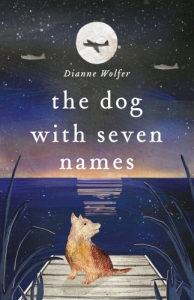
Win a signed copy of Dianne Wolfer’s new book, The Dog with Seven Names.
Poor Harry doesn’t love dressing up, but maybe your dog does …
During WW2, the dog in Dianne’s new story is given seven names; Princess, Dog, Flynn (after the founder of the Flying Doctor Service), Gengi (gold), Florence (after the famous nurse), Pooch and Engel (angel).
Choose one of those names as inspiration to style your own dog and send Dianne a photo. The one Harry likes best will win a signed book (posted to you). Photos will be shared on Dianne’s Blog and/or Dianne Wolfer – Author Facebook page. https://www.facebook.com/DianneWolferAuthor/
Now that I’ve caught my breath after returning from my whirlwind UK book launch and schools tour, I can at last share some of the lovely photos.
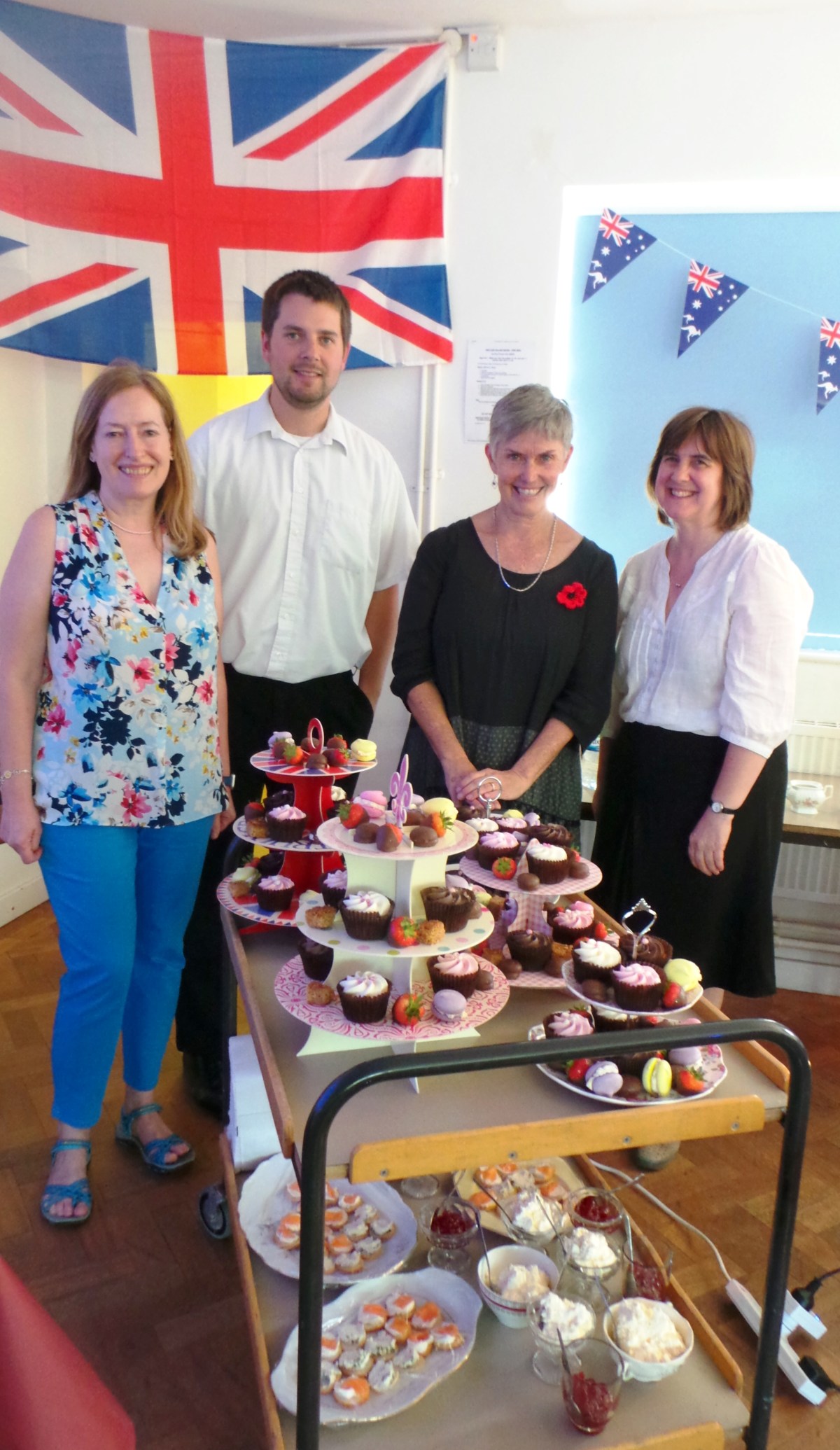
The Harefield Library and Harefield History Society both gave generous support, making the UK launch of In the Lamplight a friendly and memorable occasion. Library staff decorated their function room with Australian and British flags symbolising the close connection their town shares with Australia. Lara Marshall, Richard May and their team also provided a beautiful afternoon tea, complete with savouries, delicate cakes and delicious scones, jam and cream. Their kindness made me feel so welcome.
with Harefield library staff
With Harefield History Society members. Andy Harris (front left) gave valuable research help.
After a presentation showing pages from the book, with images from Harefield and evocative charcoal illustrations by Brian Simmonds, we shared stories about WWI, the village, now and then, and also the hospital. Then we enjoyed the scrumptious food. I learnt a lot more about the town’s history and made lovely new friends.
Despite the perfect spring sunshine outside, it was a wonderful turnout, made even more special by the arrival of family members, Brooke and Justin, who are working in Peterborough. Linda Evans my very first contact in Harefield also popped in for a chat, despite having another commitment. Thank you to everyone who helped make the celebration so special. I’d encourage any Australian history lovers who are visiting London to add a side trip to Harefield to visit the WWI Anzac cemetery and meet the friendly locals. I’m hoping to return and fingers crossed for another visit in 2019.
Thanks again, to the Department of Local Government, Sport and Cultural Industries for funding support which made this launch possible.
with suffragette Alice from St Vincents Altrincham
Alice and friends from St Vincents Altrincham
with from Kane from Harefield Junior School
students from St Vincents Altrincham
I’ve enjoyed a wonderful week of speaking and workshopping at schools across Hillingdon and Greater Manchester, celebrating the launch of In the Lamplight which is set in the UK during WWI. Students were keen to tell me about their favourite books and share personal stories. Some lovely readers like Karl from Harefield and suffragette Alice from Altrincham (pictured above) also love writing stories. And Karl wants to become an author 🙂 I was made welcome at all of the schools; thank you to staff at Harefield Infants School, Harefield Junior School, Harefield Academy, Hermitage Primary, Cedar Park School, St Vincent’s Knutsford, St Vincent’s Altrincham and Loreto Preparatory School.
There were so many highlights. I especially enjoyed talking about Australian/UK WWI links especially those relating to Harefield Hospital. Showing historic photographs that appear in the book was fun and speaking to hundreds of St Vincent’s Altrincham students dressed in costumes for History Day was amazing. Thank you to parent helpers Sharon Dobson and Catherine Collins (and Lucy, Molly and Erin) for introducing me to your fabulous schools. It’s all been wonderful …
And a special bouquet to my friend Clare Valley (originally from the UK) for sharing school/friend/family contacts. For fellow Australian authors planning a book tour, one of the most valuable things I’ve learnt from this experience is the importance of connections and word of mouth. UK schools are very security aware, without introductions from Clare I would not have been able to reach as many readers. Clare put hours of her own time into helping me plan and I am very grateful.
And thank you again, to the Department of Local Government, Sport and Cultural Industries for generous funding support.
There are many places I could have stayed in Harefield, indeed I originally booked somewhere other than Black Jack’s Mill, but something about the B&B on the canal called me. Imagine my surprise, when today I found out, that after donating their manor house for the use of convalescent soldiers in 1914, the Australian Billyard-Leake family moved into Black Jack’s Mill!
I love serendipity and have enjoyed sharing interesting conversations with other children’s authors about strange coincidences linked to their work. Synchronicity seems especially common to authors who write historical fiction (looking at you Mark Greenwood and Norm Jorgensen). To research In the Lamplight, I thought I’d read all the books about Harefield Hospital in WWI, but discovering this small snippet in Tanya Britton’s, The ANZAC Hospital No. 1 at Harefield and the Australians who died there and elsewhere but who are buried at Harefield 1914-1918 has made my day, and started me thinking about serendipity all over again. It’s also made me keen to find out more about both the Billyard-Leake’s and Black Jack. So far no one has been able to confirm whether the latter was a horse or a man. Hopefully more details to follow…
Imagine being a wallaby in a small English village during WWI. Jimmy (sometimes referred to as Jimony) was one of many Australian animals taken to WWI as mascots to cheer the troops and to remind them of home. Jimmy’s story is both strange and sad … Researching this wallaby was time-consuming. There were differing accounts surrounding Jimmy, making it hard to know which lead to follow. I also found historical inconsistencies when I was researching Lighthouse Girl and Light Horse Boy. It’s an exciting and frustrating part of writing historical fiction. As time goes by, more primary resources are uncovered, shedding new light on what we know and stories can change.
Before Jimmy became the mascot of the No 1 Australian Auxiliary Hospital at Harefield, he was the mascot of the Australian Third Division. Tanya Britton’s Harefield during the First World War reports that, ‘Jimmy had been presented to one of the volunteer [hospital] workers in October 1916 by the daughter of Sir William Birdwood…’ Meanwhile Mary P. Shepherd’s Heart of Harefield reports that, ‘In October 1916, before setting out forFrance, men of the Third Division AIF presented a wallaby (a small kangaroo) to one of the volunteer workers, the daughter of General Sir William Birdwood …’ The difference between the two is slight but important; was Nancy Birdwood entrusted with Jimmy’s care or did she present him to someone? It’s an intriguing detail which is still on my list of things to discover.
Nancy’s story is also fascinating. She was the eldest daughter of General Birdwood, the man who commanded the Australian troops for much of the war. She volunteered at Harefield Hospital, fell in love with a Western Australian airman and ended up migrating home with him. But that’s another story …
Back to Jimmy. It seems that Harefield’s wallaby mascot regularly strayed from the hospital, roaming/hopping around the village, bringing smiles to the faces of patients, nurses and villagers. However this freedom also led to Jimmy’s untimely passing. Harefield’s beloved wallaby was remembered as, ‘the most peaceable and tame of any animal of that kind …’.
Reports surrounding Jimmy’s death varied greatly. To try and unearth the truth, I travelled to the Australian War Memorial Research Centre in Canberra and trawled through 100 year old copies of Harefield Park Boomerang, the hospital’s magazine. My patience was rewarded with the article extract on p.57. Rose’s diary account on p. 56 is based on this primary resource. This also cleared up any confusion regarding his name.
Australian War Memorial image
taken at Harefield Hospital
Jimmy wasn’t the only Australian mascot at Harefield. There was also a cockatoo which had been brought from the trenches of Gallipoli. The bird had the unnerving habit of imitating the sound of a Turkish shell blast. This wasn’t good for the shell-shock patients.
One of the things that fascinated me as I wrote Light Horse Boywas the variety of WWI mascots; there were dogs, cats, rabbits, monkeys, roosters, kangaroos, wallabies and even one poor koala named Teddy. They seemed to bring a smile to the faces of the soldiers. When I visited the Gallipoli Peninsula I was amazed to find similar WWI images in Turkish museums. The old photographs showed Turks playing with their small animal mascots in just the same ways. Soldiers have been taking animals to war since our earliest stories. Sadly for the Australian veterans, the animals were not allowed to return, but then again, there are the stories of warhorse Sandy and canine Horrie …
Thank you to the Department of Local Government, Sport and Cultural Industries for their generous funding support.
So many stories came to light during three years+ of research. Each one worthy of its own book. The Anzac Flag and Harefield Quilt are two objects that captured the patriotic mood of the time. Both keepsakes survive one hundred years later; one in Harefield and the other in South Australia.
The Anzac Flag: Last week, I wrote about Headmaster Jeffrey running into a classroom to pull down a Union Jack to drape over Private Wake’s bare coffin. As the war continued more patients died and the flag was used many times to cover soldiers’ caskets on their final journeys from hospital to graveyard.
Photo: Andy Harris & Harefield History Society
Patients’ funeral cortèges passed down Harefield’s main street with villagers, patients and nurses in attendance. After the war ended, the Union Jack which had covered soldiers’ coffins was presented to the hospital’s last commanding officer. Lieutenant Colonel Yeatman was tasked with giving the flag to an Australian school and asking them to send their own flag in return. Adelaide High School was selected in recognition of the generous relief parcels which students sent to Harefield during the war years. Adelaide High School has treasured the Harefield Flag for over one hundred years, hanging it in a prominent position until it became too fragile to display. The flag has recently undergone extensive restorative work to preserve this symbol of friendship between communities.
The Harefield Quilt: was created in 1917 as a fund-raising exercise. It was made by volunteers of the British Red Cross Society. The idea with fund-raising quilts was that you donate a sixpence, write your name on a large cloth, ready to be embroidered. In the case of the Harefield Quilt, twenty small squares containing signatures surround a central square. The central patch shows the Red Cross emblem, the Advance Australia ensign as well as motifs of the 29th Battalion and 31st Battalion of the Eighth Brigade.
Photo: Andy Harris/Harefield History Society
Descendants of Mrs Helena Gough who opened tearooms in her home in High Street presented the quilt to St Mary’s Church for safekeeping in 1972. Each April the quilt is displayed on Anzac Day in remembrance of the soldiers who died in Harefield. In 2015 a centenary quilt was commissioned. It hangs in the Harefield Hospital.
Next Wednesday’s post will focus on Jimmy the wallaby mascot and the Harefield cockatoo. Thank you to the Department of Local Government, Sport and Cultural Industries for funding support.
After years of researching and writing, it’s interesting to look back at how a book started. The idea for In the Lamplight began with research for its partner titles, Lighthouse Girl and Light Horse Boy. Then around 2012, I heard about the Gilgandra Coo-ee March. After heavy losses at Gallipoli, WWI recruiting drives occurred across Australia (Men from Snowy River, March of the Dungarees). Gilgandra was the first.
In October 1915 two brothers gathered a group of 26 men. They set out from Gilgandra on a march to Sydney (320 miles). By the time they arrived, the number of recruits had grown to 263. One of the brothers, Bill Hitchen (plumber and captain of the Gilgandra rifle club), died at Harefield in September 1916. Bill’s story inspired me and I was curious to learn more.
Fast forward to 2013 when I accompanied my husband on a trip to Albany’s sister city, Pèronne for Remembrance Day. Before flying home we had a day in London. While Pete walked around Westminster, I caught a train and bus to Harefield village, on the outskirts of London to visit Bill’s grave. A kind local helped me with directions. We began chatting and she walked with me to St Mary’s Anzac Cemetery, the resting place of Bill, 111 of his fellow soldiers and Sister Ruby Dickinson. I found Bill’s grave and then visited the Anzac Wing of Harefield Hospital, learning how in 1914 the Billyard-Leake family (expat Australians) donated their home, Harefield House for recuperating Australian soldiers to use for the duration of the war.
at the grave of Bill Hitchens (Gilgandra Cooee
The Anzac wing also held photographs; evocative WWI images of recuperating patients and nurses. One photo captured my attention. It was a photograph of a nurse stroking a wallaby mascot. I’ve since found another AWM image of the wallaby, ‘Jimmy’ (sometimes named Jimony) being fed by the same nurse, who I discovered is Nancy Birdwood, daughter of General Birdwood (commander of the Australian Imperial troops). Nancy volunteered at Harefield Hospital and later married a West Australian airmen, but that’s another story…
Some readers know my fascination with WWI animal mascots. This began during the creation of Light Horse Boy and has continued to grow. I suspected that Nancy’s wallaby could be the same fellow that stands proudly to attention in the AWM photograph below (I love this photo). I wanted to find out more about the wallaby’s story and will post more about Jimmy in a future blog.
Australian War Memorial image
taken at Harefield Hospital
Australian War Memorial
Harefield House became the 1st Australian Auxiliary Hospital, sometimes treating up to 1000 patients. The first nurses, led by the very capable Matron Ethel Gray, arrived in May 1915. As casualties increased, life in the small village of Harefield changed forever. The village green was filled with homesick soldiers in their distinctive slouch hats. Kind-hearted villagers did all they could to help the young men so far from home. They read to patients, taught them handicrafts and French, took the men for automobile outings and organised concerts and sporting matches.
Deciding which WWI images to include in my book was a challenge. There were so many great photos. My favourites include patients skating around the frozen lake with the support of chairs, Jimmy posing with the brass band, as well as one moving photograph of a one-legged lad playing cricket with laughing nurses fielding. The lad looks so young.
More sombre photographs are also included; of funeral parades and shell-shocked amputees. During WWI over 50,000 Australian soldiers were treated at Harefield Hospital. Towards the end of the war, when Spanish Influenza ravaged Europe, there were deaths most weeks. Strong lads who’d survived months in the trenches, sometimes died within a day from this terrible illness as their lungs filled with fluid.
Harefield villagers lined the streets to honour funeral parades from the hospital to St Mary’s cemetery. The first death was in February 1916. As Private Robert Wake’s coffin passed the Junior School, headmaster Jeffrey ran inside, pulled a flag from the classroom wall and draped it over the bare coffin. This flag was used in subsequent funeral processions and still exists today (more on that next week). Connections between Harefield and Australia remain strong and I’m grateful to Harefield residents for their historical advice; particularly Lorraine Piercy and Andy Harris. Each Anzac Day, local schoolchildren lay flowers against the headstones for the Australians who died in their village.
Lest we forget.
Next week I’ll share two stories linked to In the Lamplight; the Anzac quilt and the Harefield flag. I am grateful for funding support from the Department of Local Government, Sport and Cultural Industries.
With less than a month until publication I’m now on countdown to the launch of In the Lamplightthe third and final book in my ‘Light’ series. From today, I’ll be writing a weekly blog post sharing details about my research and writing journey, but first, I’d like to acknowledge the generous support of the Department of Local Government, Sport and Cultural Industries. I’m the very grateful recipient of a Commercial Development funding grant which will allow me time to maximise interest in this new title and also help me try and gain a footprint in the elusive and hard to crack UK market. Wish me well and I hope you’ll follow my blog journey over the next weeks.
I’ll be writing about In the Lamplight‘s links to WWI Harefield (UK) and the 1st Australian Auxiliary Hospital that grew out of an expat Australian’s English manor house. We’ll meet Jimmy the wonderful wallaby mascot that hopped around Harefield village and some of the soldiers and nurses that served in Harefield during the war. I’ll share the history of the Anzac flag and its links to Adelaide High School. I’m also keen to post photos and information I discovered as part of my research about the suffragette movement, WWI nursing and changing roles of women, as well as after effects of the war and the horrors of the 1918/1919 worldwide Spanish Influenza pandemic (more deaths were attributed to influenza than entire war casualties).
illustration: Brian Simmonds
Next week my blog focus will be on Harefield, the English village just north of London (and setting of In the Lamplight), its WWI cemetery and ongoing Anzac links…
With Remembrance Day this Saturday and the final draft of my new manuscript going to print, it feels timely to share a sneak peek of the cover of this third title in my ‘Light’ series.
In the Lamplight is a companion novel for my historical titles Lighthouse Girl and Light HorseBoy. The story follows fictitious Rose through WWI and overlaps with Jim’s Light Horse journey, then links back to Albany’s King George Sound. Thank you to the Department of Local Government, Sport and Cultural Industries, whose generous support allowed me time to write a first draft. Here is the blurb:
Rose O’Reilly’s sheltered life in the peaceful English village of Harefield takes an unexpected turn with the outbreak of war in 1914. A local manor house becomes a repatriation hospital for wounded Australian soldiers and Rose begins helping out by reading to patients and pushing wheelchairs.
As the war progresses, and slouch hats fill the village green, Rose’s skills grow and she begins training alongside the Australian nurses. Then a new patient arrives. Sergeant Jim O’Donnell is unable to walk and his eyes are bandaged, but he will change Rose’s life forever.
In the Lamplight will be published by Fremantle Press in April 2018. I’m currently taking (WA) bookings for school/library visits in the last two weeks of Term 1. Please email me (contact tab) if your school would like an Anzac themed presentation (ASA rates and small travel fee). I’ll also be visiting schools in the eastern states, probably early Term 2. I’ll post again with more details and launch information early in 2018.
For a year or so, I’ve been struggling with finding the right title for my almost completed manuscript, a companion title for Lighthouse Girl and Light Horse Boy. For continuity reasons I wanted the word ‘light’ somewhere in the title. We aren’t meant to judge a book by it’s cover, but research indicates that many of us do.
This story has been on the back-burner since 2011 when I visited the Anzac cemetery in the UK village of Harefield to research another idea (more about that journey in future posts). Ideas bubbled away as I completed other projects and then last year, at last, I was able to give this story dedicated time (thank you Department of Local Government, Sport and Cultural Industries). While the manuscript was a work-in-progress I initially referred to it as Quarantine Rose; a shocker of a title which I knew would never be the one. I couldn’t change my central character’s name because Rose is an overlap character with Light Horse Boy. For a while the title shifted to Rose on No Man’s Land, linking the story to a popular WWI song. However Rose works in a hospital not on the battlefield.
As the manuscript took shape I knew I needed a better title. At the annual SCBWI Rottnest retreat, fellow author Norman Jorgensen came up with the evocative Light from a Broken Lantern, however as the story progressed, there was more hope than brokenness. Sorry Norm!
Sometimes the right title appears at the same time as the first story idea. Other titles involve weeks of compiling lists and thesaurus trawling. Lighthouse Girl for a long while was Postcards from Breaksea, or simply Postcards. Then about two years into the four year writing process, the current tile settled. For Light Horse Boy, the final title was always the one.
With my going-to-print deadline quickly approaching, this month I sent out a cry for help. Thank you friends and family, writer group peers, bookgroupies and others who answered my call. You offered so many great suggestions. Even the cheeky suggestions from family were useful, as they sparked other ideas using the words light, shadow and darkness.
Meanwhile Fremantle Press have been market-testing one of the options on our short-list of title choices and I am pleased to finally announce that the title has been decided. The book will be called In the Lamplight. Tentative release date is April 2018. I hope readers will enjoy this new addition to the ‘light’ series. Thanks again to all the wonderful title-hunters for your kind suggestions…

















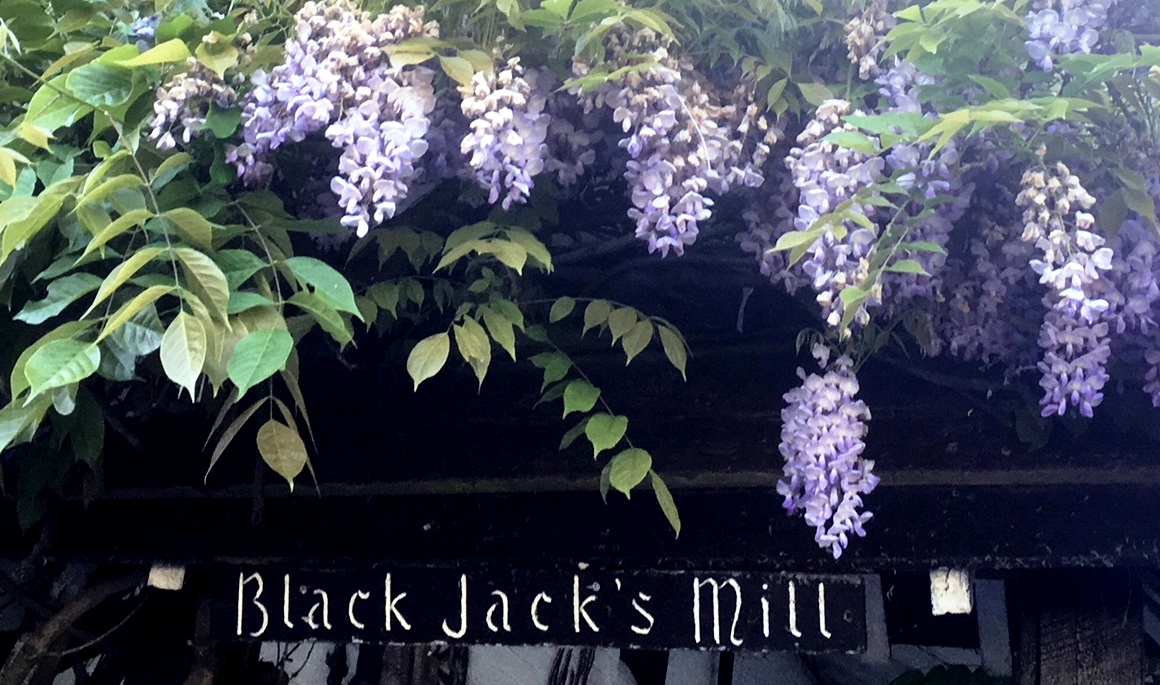 There are many places I could have stayed in Harefield, indeed I originally booked somewhere other than Black Jack’s Mill, but something about the B&B on the canal called me. Imagine my surprise, when today I found out, that after donating their manor house for the use of convalescent soldiers in 1914, the Australian Billyard-Leake family moved into Black Jack’s Mill!


 I’m the very grateful recipient of a Commercial Development funding grant which will allow me time to maximise interest in this new title and also help me try and gain a footprint in the elusive and hard to crack UK market. Wish me well and I hope you’ll follow my blog journey over the next weeks.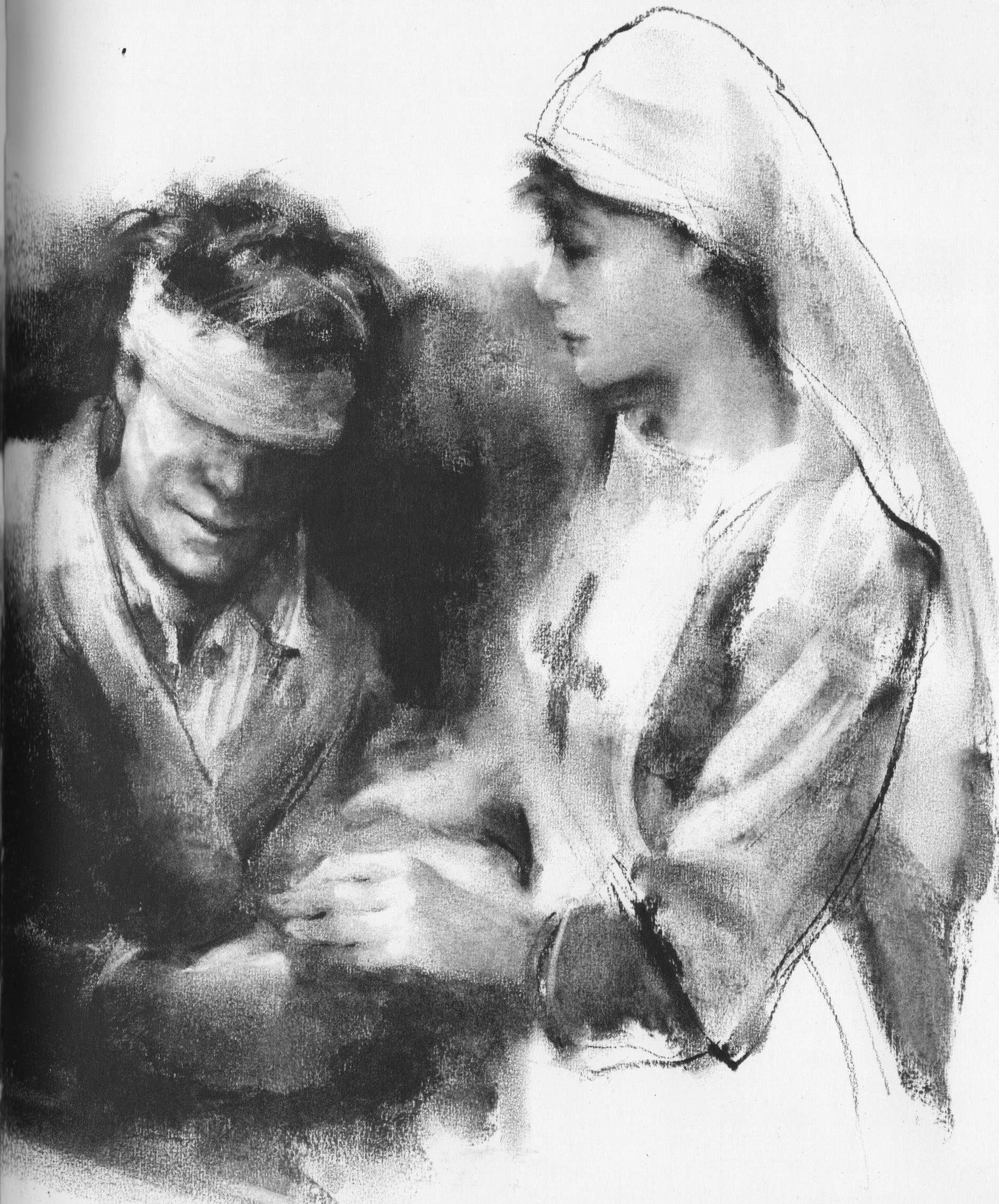

 If it’s a book title, a lot!
 Dianne Wolfer